
Artificial Intelligence is becoming the topic of every conference, boardroom discussion, and technology roadmap. We hear promises of predictive analytics, automated reporting, workforce optimisation, risk forecasting, and operational intelligence.
But there is a fundamental problem.
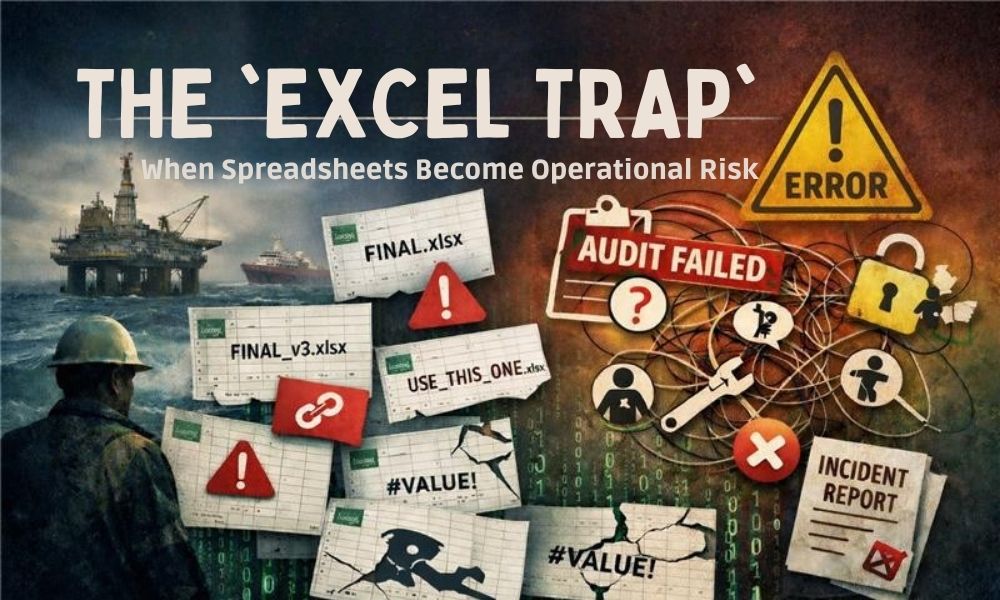
Most of the offshore and marine industry is still heavily reliant on paper-based processes.
The reality is that AI is only as good as the data it receives. If the underlying information is incomplete, inconsistent, inaccurate, or stored in filing cabinets, spreadsheets, PDFs, and handwritten logbooks, then the outputs generated by AI cannot be trusted.
The industry cannot skip steps.
The Foundation Comes First
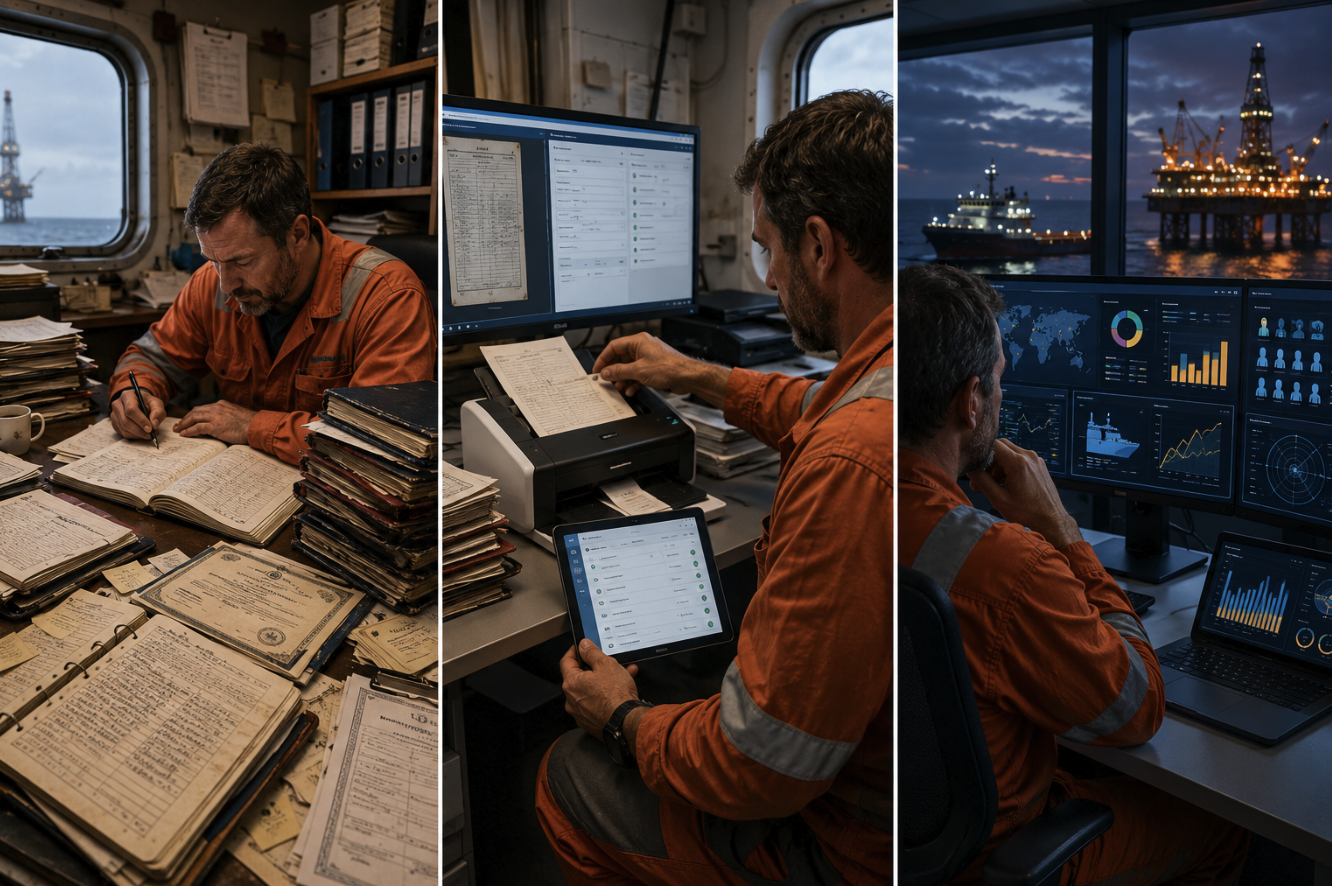
Before we can unlock the true value of AI, we must first digitise the industry.
For decades, critical operational information has been captured on paper:
- Logbooks
- Daily activity reports
- Competence records
- Maintenance records
- Vessel documentation
- Training certificates
- Inspection reports
- Project records
These documents often contain valuable information, but they are difficult to search, analyse, verify, and share.
The first step is moving this information into a structured digital format.
Digitising the Past
Modern OCR (Optical Character Recognition) technology allows historical paper records to be converted into digital data.
However, simply scanning documents is not enough.
The extracted information must be reviewed, verified, and structured correctly. Dates, names, activities, qualifications, locations, assets, and operational records all need to be captured consistently.
This process takes time.
Accuracy matters.
If a diver’s logbook entry is interpreted incorrectly, if a certificate date is captured incorrectly, or if an activity is categorised incorrectly, those errors become part of the digital record.
Bad data entered into an AI system simply produces bad results faster.
Building Trust in the Data
Before introducing AI-driven reporting and analytics, organisations need confidence that their data is:
- Accurate
- Verified
- Structured
- Consistent
- Auditable
- Captured directly at source
This is where digital platforms play a critical role.
By replacing fragmented paper processes with connected digital workflows, organisations can begin creating trusted datasets that accurately reflect what happened, who did it, where it happened, and when it happened.
Only then do meaningful analytics become possible.
AI is the Next Step, Not the First Step
Once an organisation has accumulated sufficient volumes of verified and structured data, AI becomes incredibly powerful.
AI can then help answer questions such as:
- Which competencies are becoming scarce?
- Where are compliance risks emerging?
- Which operational activities have the highest incident rates?
- What workforce trends are developing across projects?
- Which assets are showing early warning signs of failure?
- Where can operational efficiencies be improved?
The difference is that these insights are based on trusted information rather than assumptions.
Baby Steps Lead to Big Outcomes
The industry’s digital transformation journey should not begin with AI.
It should begin with digitisation.
- Capture information digitally.
- Convert historical paper records using OCR.
- Verify and structure the data.
- Build confidence in the information.
- Create a trusted digital dataset.
- Introduce AI-powered reporting and analytics.
AI is not the starting point.
AI is the reward for getting the fundamentals right.
The offshore industry has spent decades creating valuable operational knowledge. The challenge now is not generating more data it is transforming existing information into a trusted, digital foundation that can support the next generation of intelligence.
Only once that foundation exists can AI deliver the insights the industry is looking for.